
Cold calling can be a daunting task for many sales professionals. It requires a great deal of confidence, persistence, and the ability to handle rejection. Yet, it remains one of the most powerful tools sales representatives have in their arsenal. Despite the rise of digital marketing, cold calling still provides direct, immediate access to decision-makers, making it an essential sales tactic.
In this article, we’ll explore insightful cold calling statistics covering success rates, optimal call timings, objection handling, follow-up strategies, and more. Additionally, you’ll find actionable, high-impact tips designed to enhance your cold calling effectiveness, to help you secure more meetings and close more deals in 2026.
Quick Answer
Is cold calling still effective in 2026?
Yes, when backed by verified data and strategic targeting.
Cold Calling Benchmarks for 2026:
- The average cold call connect rate is roughly 2% to 3%.
- Top-performing SDR teams can reach 5% to 8% meeting rates.
- Average connect rates typically land in the 15% to 28% range.
- It usually takes 6–10 attempts to reach a prospect.
- Verified direct-dial numbers increase connection rates by up to 40%.
- Multi-channel prospecting improves conversion rates by 2–3X.
Why Data Quality is the Real Cold Calling Multiplier in 2026
Cold calling success starts with the quality of your prospect data.
Sales teams that rely on generic, scraped, or outdated contact lists often struggle with low connect rates and inefficient outreach. Phone numbers change, employees move roles, and companies evolve quickly. When prospect data isn’t regularly updated, you’ll only waste time dialing disconnected numbers, reaching the wrong contacts, or targeting businesses that aren’t a strong fit.
The result is clear: fewer live conversations, more rejected calls, and longer sales cycles.
High-performing teams approach cold calling differently. Instead of dialing large volumes of unverified contacts, they prioritize smaller, more targeted prospect lists built on reliable data. With accurate contact details and better firmographic insights, reps can focus on reaching the right decision-makers at the right companies.
Pro Tip
Audit your prospect data regularly. Removing outdated contacts and focusing on verified decision-makers can dramatically improve connect rates and reduce wasted dialing time.
Maintaining clean, verified contact data is essential for consistent outreach performance, so let Salesgenie® provide you with the data quality services to help you succeed.
Core Cold Calling Benchmarks: What the Data Says
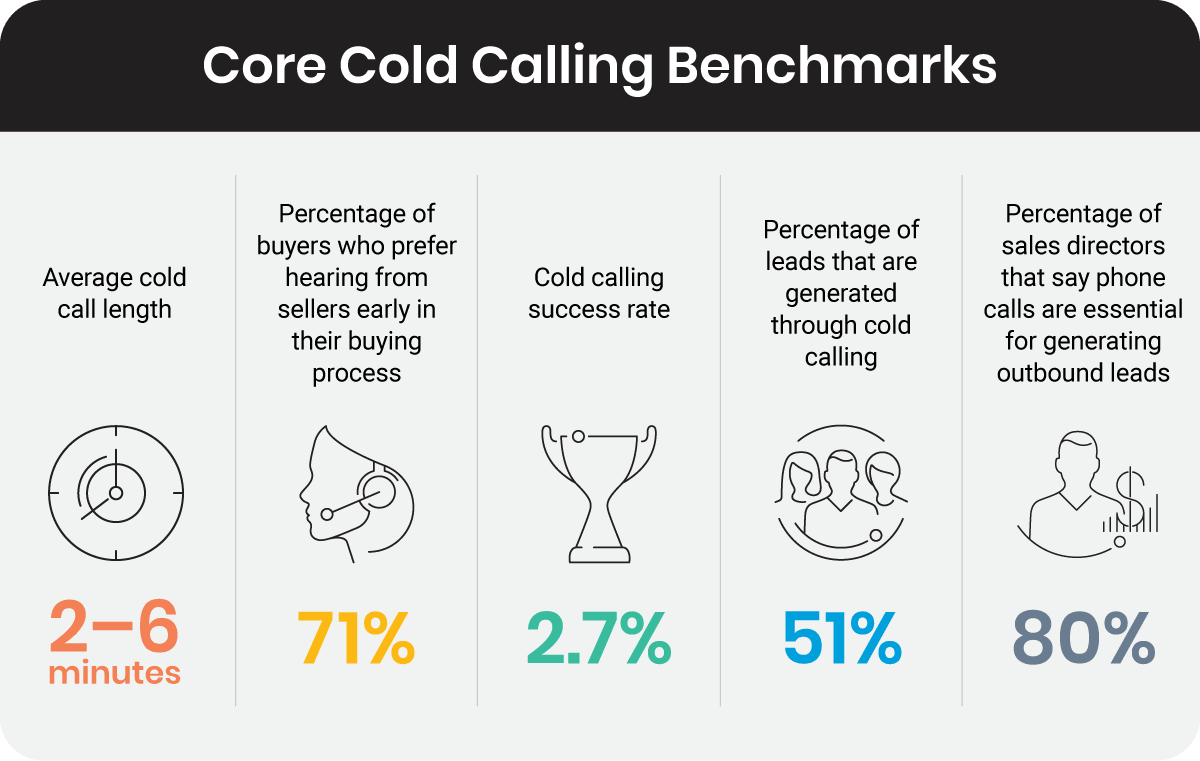
Cold calling statistics continue to prove that this outreach method is far from outdated. Cold calling remains an essential channel for connecting with prospects, so understanding key benchmarks can help your team manage their time effectively and engage potential buyers early.
Key cold calling stats include:
- The average cold call length is between 2–6 minutes.
- 71% of buyers prefer hearing from sellers early in their buying process, specifically when exploring new ideas and possibilities.
- Cold calling success statistics show only a 2.7% cold calling success rate.
- 51% of leads are generated through cold calling.
- Over 80% of sales directors say phone calls are essential for generating outbound leads.
Pro Tip
Focus on quality over quantity. Instead of chasing hundreds of calls per day, prioritize well-researched prospects and personalized outreach to improve your meeting conversion rate.
Cold Calling vs. Other Outreach Channels (2026)
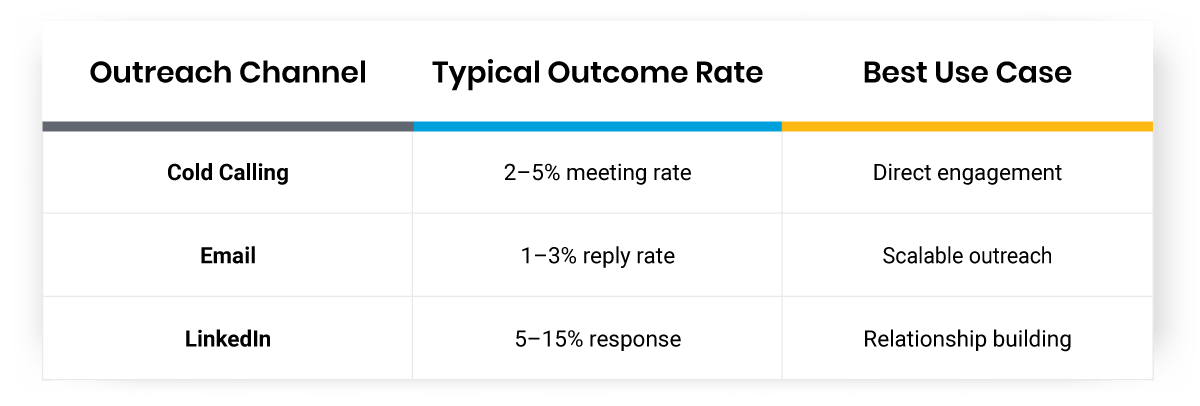
The most effective sales teams rarely rely on a single outreach channel. Instead, they combine cold calling with email and LinkedIn outreach to increase visibility, reinforce messaging, and reach prospects through the channels they prefer. Each method plays a different role in the sales process, from initiating conversations to nurturing relationships over time.
The table below highlights how these outreach channels typically perform and when each one is most effective.
B2B Cold Calling Statistics: The Critical Role of Data Accuracy
Reliable data is the backbone of successful B2B cold calling and plays a major role in determining the B2B cold call performance benchmark for modern sales teams. These statistics highlight just how dramatically your success rates can improve when your data is accurate and consistently updated:
- B2B data decays at an average of 70.3% annually.
- Inaccurate data can cause companies to lose up to 12% of their revenue.
- Poor data quality costs organizations an average of $12.9 million per year.
Cold Calling Success-Rate Statistics: How to Improve Your Conversion
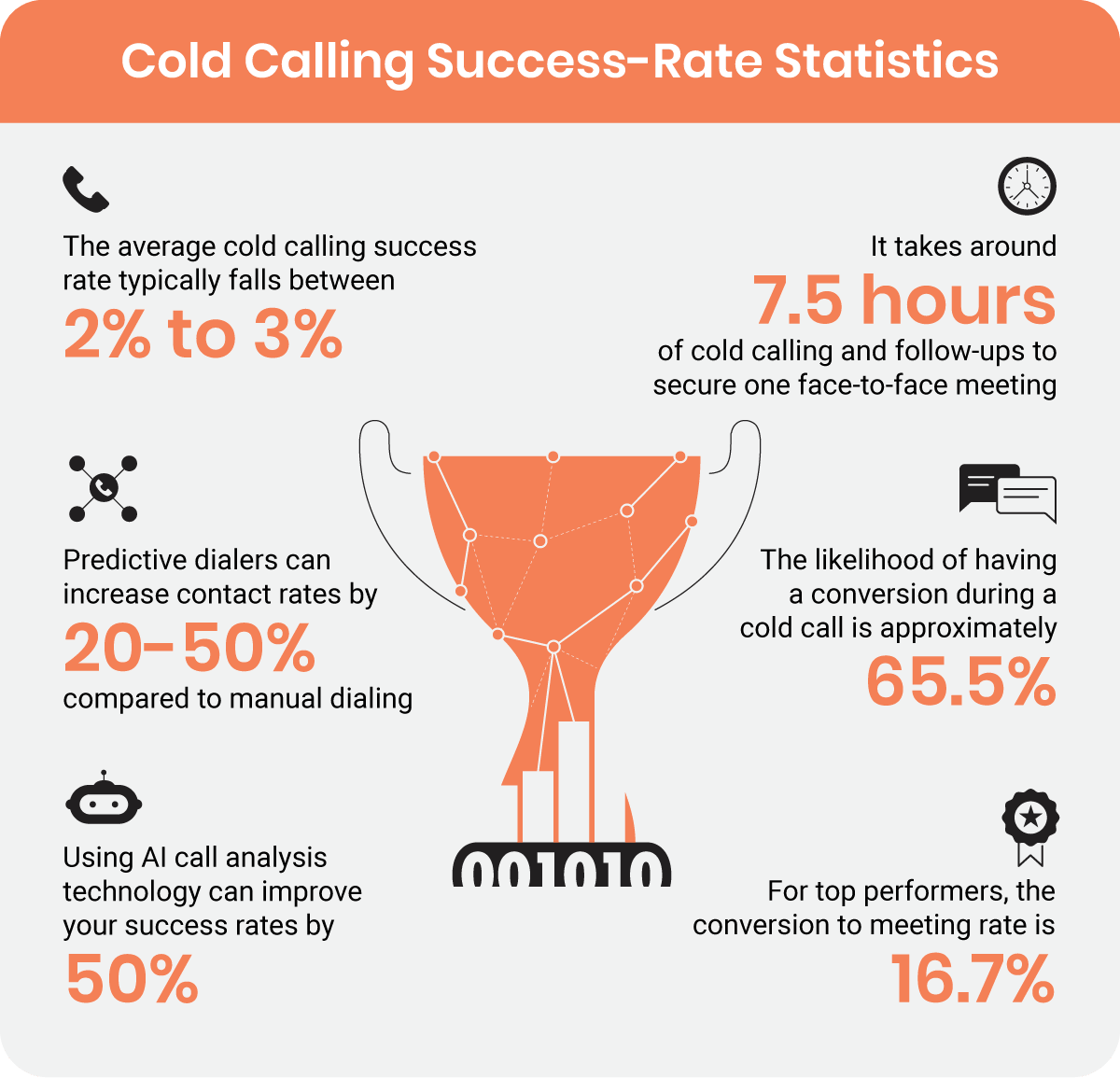
Understanding cold calling success rates in 2026 offers valuable insight into what separates top-performing sales reps from the average. To boost your cold calling success rate, use these benchmarks to refine your sales strategy and improve outcomes:
- The average cold call success rate typically falls between 2% to 3%.
- Predictive dialers can increase contact rates by 20–50% compared to manual dialing.
- Using AI call analysis technology can improve your success rates by 50%.
- It takes around seven and a half hours of cold calling and follow-ups to secure one face-to-face meeting.
- The likelihood of having a conversion during a cold call is approximately 65.5%.
- For top performers, the conversion to meeting rate is 16.7%.
Pro Tip
Combine better technology with better targeting. Tools like predictive dialers and AI call analysis are most effective when paired with accurate contact data and clear messaging.
Optimal Calling-Time Statistics: Best Cold Call Timing in 2026
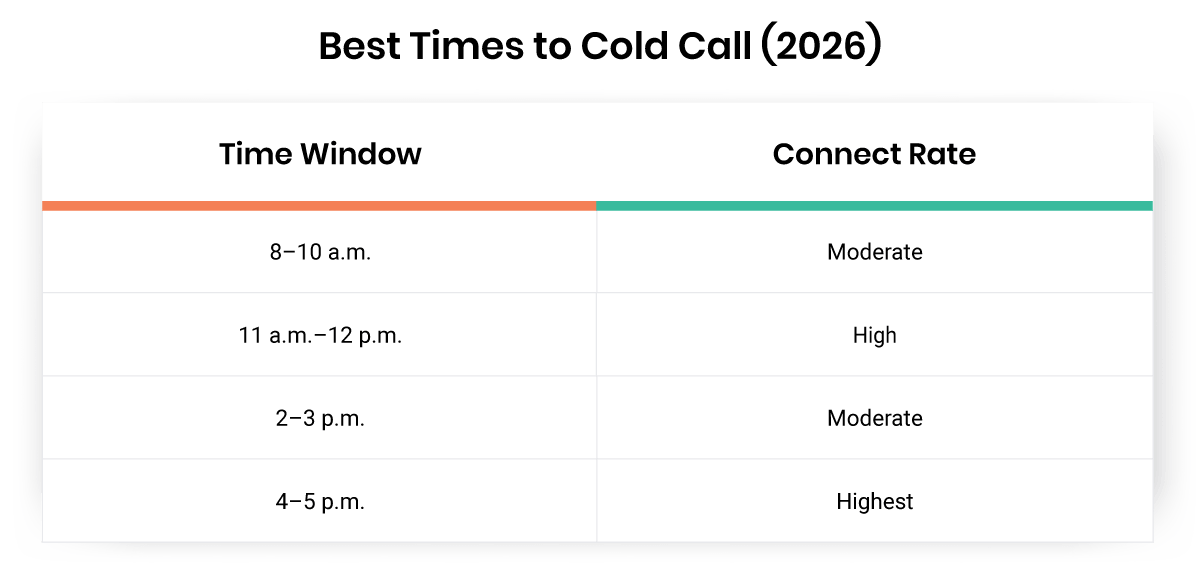
Timing is critical to the success of your cold calling strategy. Knowing exactly when to reach out increases your chances of connecting, having meaningful conversations, and ultimately closing deals. These optimal calling-time stats provide clear windows to help sales representatives make every dial count:
- The best time to cold call prospects is between 10 a.m. and 12 p.m. and between 4–5 p.m., as this hour typically yields the highest connection rates.
- Wednesdays deliver the highest cold-call connect rates—up to 50% more conversations than other weekdays.
- Top-performing sales reps typically make 52–60 calls per day and ask 11–14 questions during each call.
- Average cold call duration has risen from 83 seconds to 93 seconds.
Pro Tip
Schedule dedicated call blocks during peak connection windows. Protecting mid-morning and late-afternoon dialing time can significantly increase live conversations.
Follow-Up & Persistence Statistics: How Many Attempts Does It Really Take to Connect?
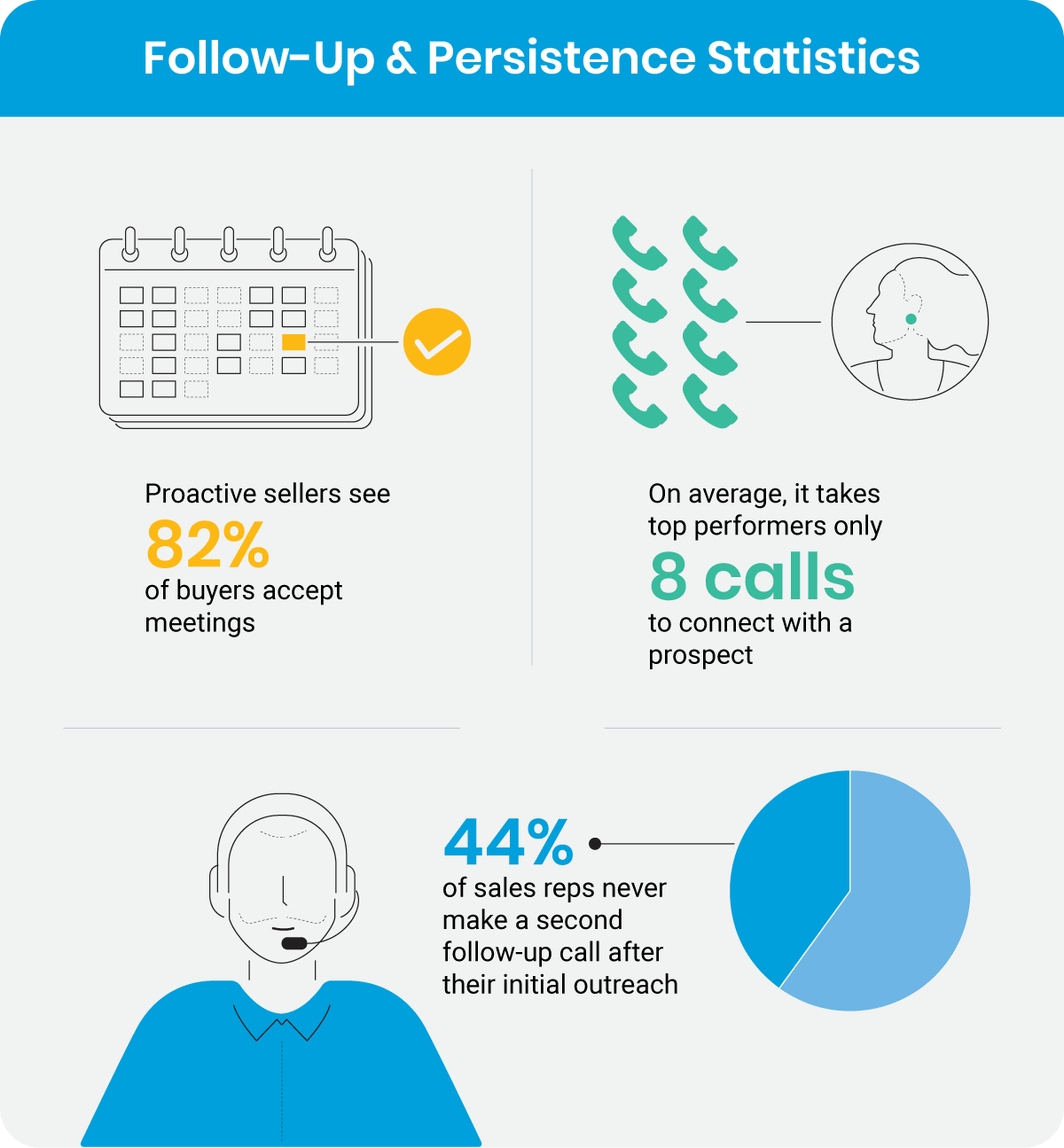
Persistence often distinguishes successful sales professionals from the rest. The following stats demonstrate the importance of continued outreach, highlighting exactly how many calls are needed and the value of proactive follow-ups:
- Proactive sellers see 82% of buyers accept meetings.
- On average, it takes top performers only eight calls to connect with a prospect.
- 44% of sales reps never make a second follow-up call after their initial outreach.
Pro Tip
Build a structured follow-up cadence. Combining phone calls with email and LinkedIn touches helps keep you top-of-mind and increases the chances of reaching busy decision-makers.
Running Successful Demo Calls Statistics: Proven Techniques That Close Deals
Discovery and demo calls are pivotal opportunities to turn prospects into customers. To make the most of these conversations, see proven methods that help top sellers close more deals:
- Top-performing sales representatives ask 39% more questions during discovery calls than their peers.
- Top reps conduct discovery calls that are 76% longer.
- Top-performing salespeople speak at an average of 150 words per minute.
- Asking between 11–14 questions on a cold call has a 70% success rate.
Which AI and Tech Trends are Transforming Cold Calling?
Many sales teams are now adopting AI tools for cold calling in 2026 to improve prospect targeting and conversation analysis. Instead of relying only on manual dialing and generic scripts, sales teams are using technology to improve targeting, productivity, and call quality.
- AI dialing tools such as predictive and power dialers reduce downtime between calls and help reps connect with more prospects in less time. Many teams use these tools to streamline outbound workflows and increase daily call volume.
- Call sentiment analysis is another growing trend. AI can analyze conversations to identify tone, engagement, and common objections, helping managers understand what top performers are doing differently and coach teams more effectively.
- Sales teams are also using predictive lead scoring to prioritize prospects who are more likely to convert. By analyzing firmographic data, buying signals, and engagement patterns, AI tools help reps focus on higher-value opportunities instead of dialing unqualified leads.
Together, these technologies are making cold calling more efficient, data-driven, and targeted, allowing sales teams to spend less time guessing and more time speaking with qualified prospects.
What is the Future of Cold Calling?
Cold calling isn’t going away; in fact, it’s rapidly evolving. As buyers become savvier and competition increases, traditional methods alone won’t suffice. Moving forward, cold calling will rely heavily on personalization, intent-based targeting, and multi-channel integration.
Ideally, teams will leverage real-time intent data to pinpoint exactly when and why prospects are interested, ensuring calls happen at the most receptive moments. Additionally, technologies such as conversational AI, automated dialers, and personalized video messaging will become standard tools, empowering reps to reach decision-makers efficiently and effectively.
Ultimately, the future belongs to sales professionals who seamlessly blend data-driven insights, targeted personalization, and genuine human connection into their cold-calling strategies.
7 High-Impact Cold Calling Tips to Increase Your Win Rate
Considering the above statistics, you can implement these practical tips to significantly enhance your cold-calling effectiveness:
- Lead with Curiosity, Not a Pitch: Open conversations with genuine curiosity about the prospect’s situation, fostering trust and engagement.
- Prioritize Data Quality: Regularly update and verify your prospect data to reduce wasted time and ensure accurate targeting.
- Master Your Opening Line: Craft concise, personalized openers that directly reference the prospect’s industry, role, or recent company developments.
- Practice Active Listening: Aim to speak less and listen more. Use your prospects’ answers to move the sale forward.
- Schedule Calls Strategically: Align your calls with proven optimal times, such as late afternoon or mid-morning, to improve connection rates.
- Follow Up Persistently and Politely: Commit to at least 6–8 touchpoints per prospect, using multiple channels (phone, email, social media) to stay top-of-mind.
- Speak Slower and Clearly: Slow down your speaking pace to convey confidence and help prospects absorb your message more effectively.
Key Takeaways
Cold calling continues to be a high-impact sales strategy, especially when powered by data, timing, and persistence. As we move through 2026, sales professionals who embrace the evolving best practices of cold calling outreach will significantly outperform the competition. Here’s what you should remember:
- Timing is Everything: Calling between 10 a.m.–12 p.m. and 4–5 p.m., especially on Wednesdays, delivers the highest connect rates.
- Speed to Lead Pays Off: Reaching a lead within the first minute can significantly boost conversion rates.
- Data Quality Drives Results: Consistent data hygiene is essential to avoid revenue loss and improve targeting accuracy.
- Persistence Wins: It takes more than six attempts to significantly increase contact rates, yet nearly half of reps stop after just one follow-up.
- Discovery is a Differentiator: Top-performing sales reps ask more questions and hold longer discovery calls, leading to stronger connections and better close rates.
- Technology is Your Ally: Tools like predictive dialers and AI-driven call analysis can meaningfully improve efficiency and success rates.
- Human Connection Still Matters: Slower speech, active listening, and personalized openers create trust and engagement, which are essential in converting cold calls into qualified leads.
By integrating these insights and statistics into your daily routine, you’ll not only increase your call success rate but also build lasting customer relationships that convert into long-term business. Stay informed, stay proactive, and let the numbers guide your strategy.
Learn how you can generate leads with Salesgenie.
How Sales Teams Use Salesgenie to Improve Cold Calling Results
Instead of relying on outdated spreadsheets or scraped contact data, many teams use platforms like Salesgenie to access verified business and consumer information and identify the right prospects faster.
By providing accurate contact details, targeting filters, and prospecting tools in one place, Salesgenie can help you spend less time searching for leads and more time having meaningful conversations with qualified buyers.
Sales teams use Salesgenie to:
- Access millions of verified business and consumer contacts
- Identify decision-makers with direct-dial phone numbers
- Segment prospects by industry, company size, and location
- Build targeted prospect lists in minutes
- Export clean lead lists directly into CRM systems
- Improve connection rates by targeting high-intent prospects
Ready to Improve Your Cold Calling Results in 2026?
When it comes to cold calling success, better data changes the equation. With accurate contact information, reliable firmographic insights, and targeted prospect lists, you can focus your outreach on businesses that are far more likely to engage.
Salesgenie helps make that possible. With access to millions of verified business and consumer contacts, powerful prospecting filters, and tools designed to help teams identify and reach decision-makers quickly, Salesgenie gives you the data you need to build stronger pipelines and improve cold calling performance.
Discover how Salesgenie can help your team find better prospects, increase connect rates, and turn more cold calls into real opportunities.
FAQs
Yes, cold calling remains highly effective in 2026. Despite digital channels, direct human interactions still strongly influence buyers, especially in B2B sales where relationships and trust are essential.
Both can be effective, but cold calling often yields quicker responses and deeper interactions, enabling immediate relationship-building. Cold emailing is effective at scale but generally has lower engagement per contact.
Most successful sales professionals average around 60 cold calls per day. Prioritize call quality and meaningful conversations over sheer volume to avoid burnout and maximize results.
On average, it takes about eight calls to book one qualified meeting. Persistently following up and personalizing each outreach can reduce this number significantly.
It takes an average of about 8–10 hours to complete 100 well-prepared cold calls, factoring in actual conversations, voicemail messages, and brief notes between calls.
According to recent data, cold calling success rates in 2026 average around 2.7%. However, personalization, strategic timing, and follow-up efforts can greatly increase your individual conversion rate.
For many teams, 2% to 3% is the average benchmark.
AI helps reps research prospects faster, personalize their openings, coach against real call data, and identify patterns in tone, sentiment, pacing, and objection handling. It is especially useful when paired with accurate data and disciplined workflows.
Yes. Multi-channel prospecting consistently outperforms single-channel outreach, with higher conversion rates and better visibility across the sales cycle.